Holiday shoppers have limited attention, and the stakes for retailers are high. November and December generate approximately 19% of annual U.S. retail sales, making the holiday season one of the most important opportunities of the year. During those critical months, creative can influence whether shoppers notice an offer, understand its value, and ultimately decide to buy.
The strongest holiday campaigns give shoppers a clear reason to pay attention. A simple message can help someone find the right gift, act on an offer, or picture a product in their home. Too much copy, competing messages, or excessive seasonal decoration can have the opposite effect, making the main idea harder to find.
For more than a decade, PebblePost has helped leading retail brands reach the right shoppers and drive measurable business outcomes during the holiday season and beyond with purchase-data-powered Programmatic Direct Mail and, more recently, Performance CTV. In Q4 2025 alone, our Programmatic Direct Mail campaigns generated more than $300 million in incremental revenue for retail brands.
That experience has given us a clear view of the creative choices that consistently help brands communicate value during one of the year’s most competitive shopping periods.
Five patterns stand out across effective retail holiday direct mail campaigns:
- restrained holiday color
- curated gift guides
- single-message promotions
- best-seller-led design
- lifestyle visualization
Together, they provide a practical starting point for creating holiday direct mail that earns attention and drives revenue.
1. Use Holiday Color Without Losing Your Brand Identity

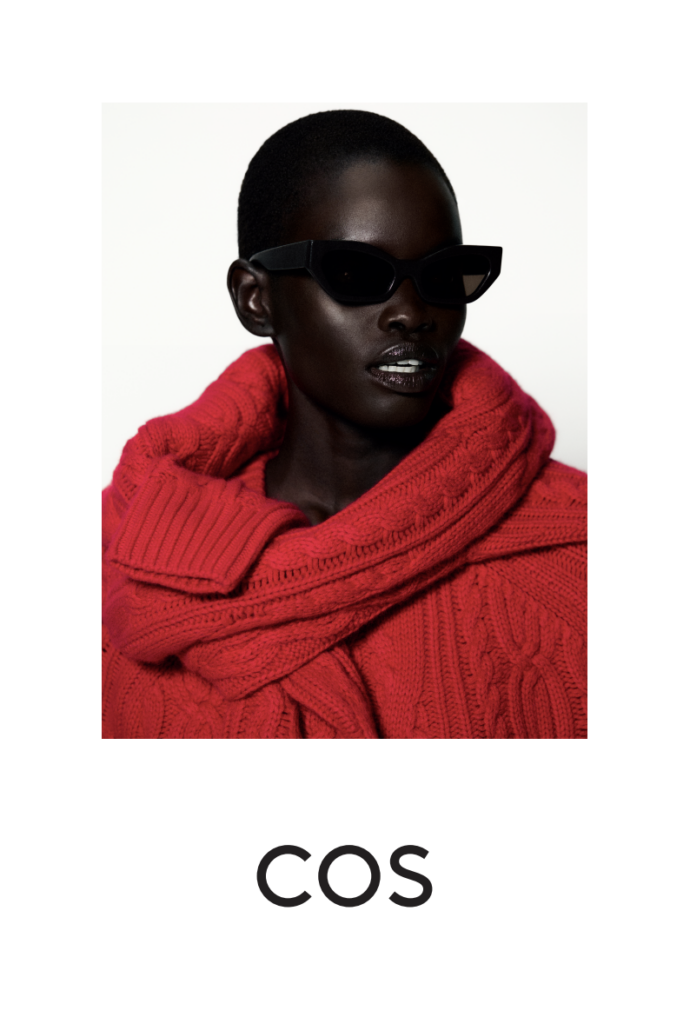
Leading retail brands such as J.Crew and COS keep their identities intact by using holiday color as an accent rather than letting it take over the entire design. Clean layouts, limited copy, and carefully chosen seasonal colors give these pieces a festive feel while staying true to the brand.
This balance is especially important for luxury and premium brands, whose customers often expect a more restrained visual style, even during the busiest shopping season. A small dose of seasonal color, such as a strip of bright red or emerald green, can add holiday relevance without disrupting a refined brand system.
The same principle applies to the overall design. Strong contrast and limited copy help shoppers understand the message quickly. That matters in direct mail, where a piece has only seconds to earn attention. A focused design communicates faster than one crowded with messages, graphics, and seasonal details.
2. Make Holiday Shopping Easier With Curated Gift Guides
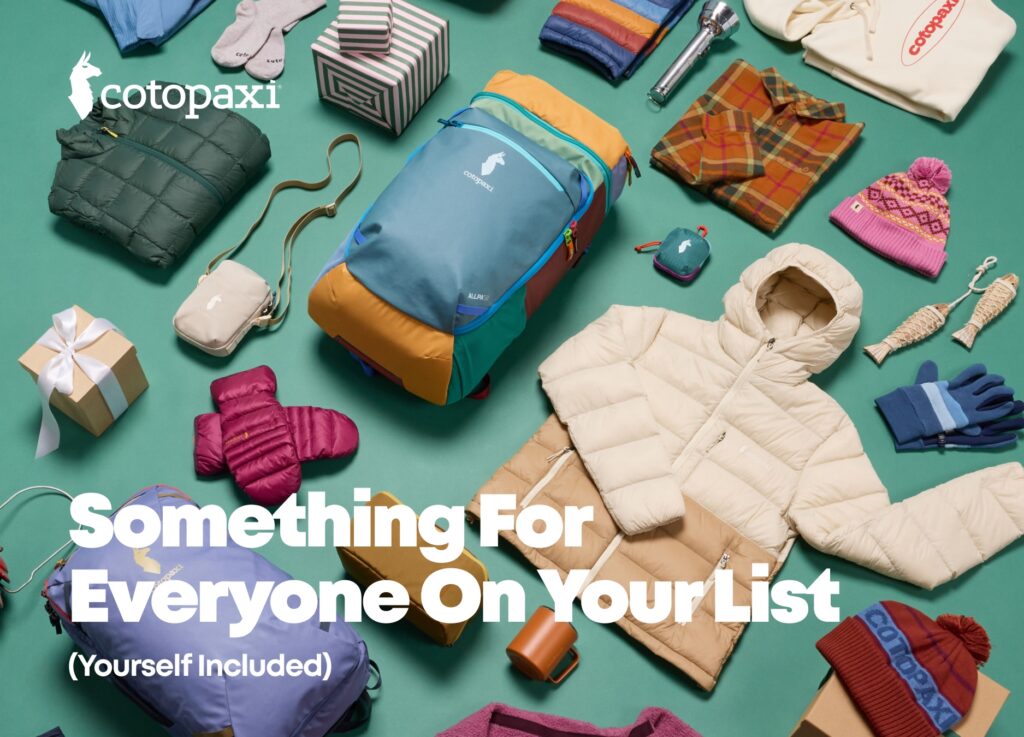
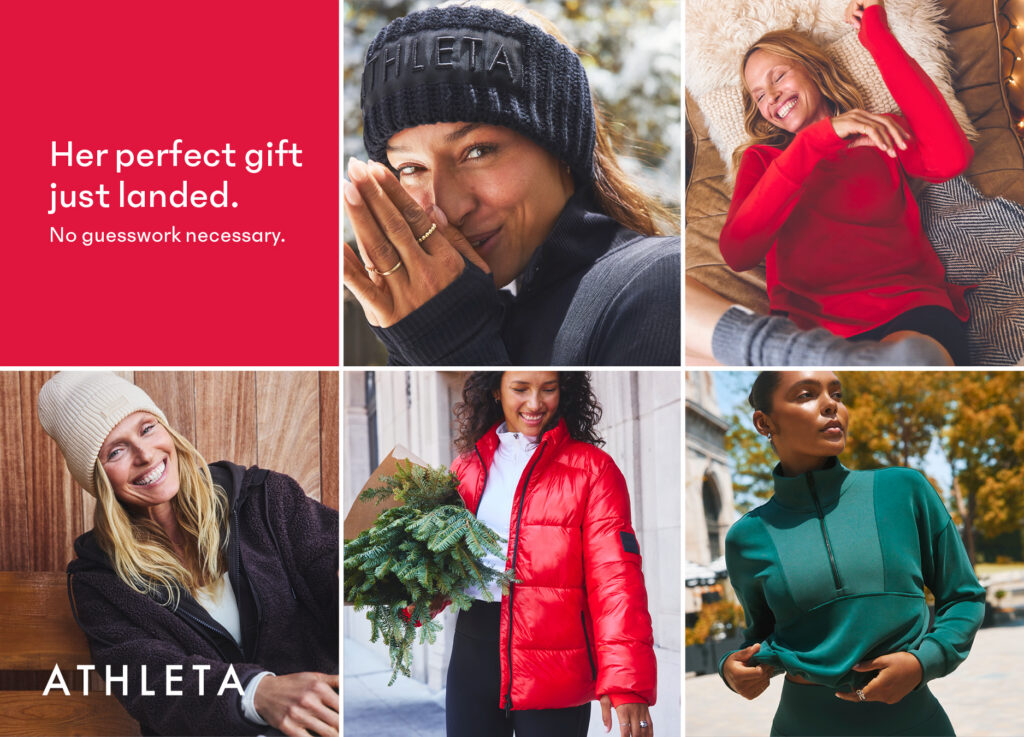
Gift guides help solve one of the biggest challenges of holiday shopping: figuring out what to buy. By narrowing the choices, they make the decision easier for shoppers while giving retailers an opportunity to put products in front of customers who might otherwise have overlooked them.
Choosing a gift can be harder than making the purchase itself. Apparel brands like Cotopaxi and Athleta keep their approach simple by showcasing standout products, identifying them as gift-worthy, and letting the shopper take it from there.
The strongest gift guides are curated rather than comprehensive. Retailers can feature best-selling or high-value products tailored to the recipient audience of a particular mail segment instead of presenting a broad assortment. That makes the creative more useful to the customer and gives each product a reason to be there.
For holiday direct mail marketing, that distinction matters. A gift guide should help the customer make a decision, not simply display more inventory.
3. Give Holiday Promotions One Clear Message
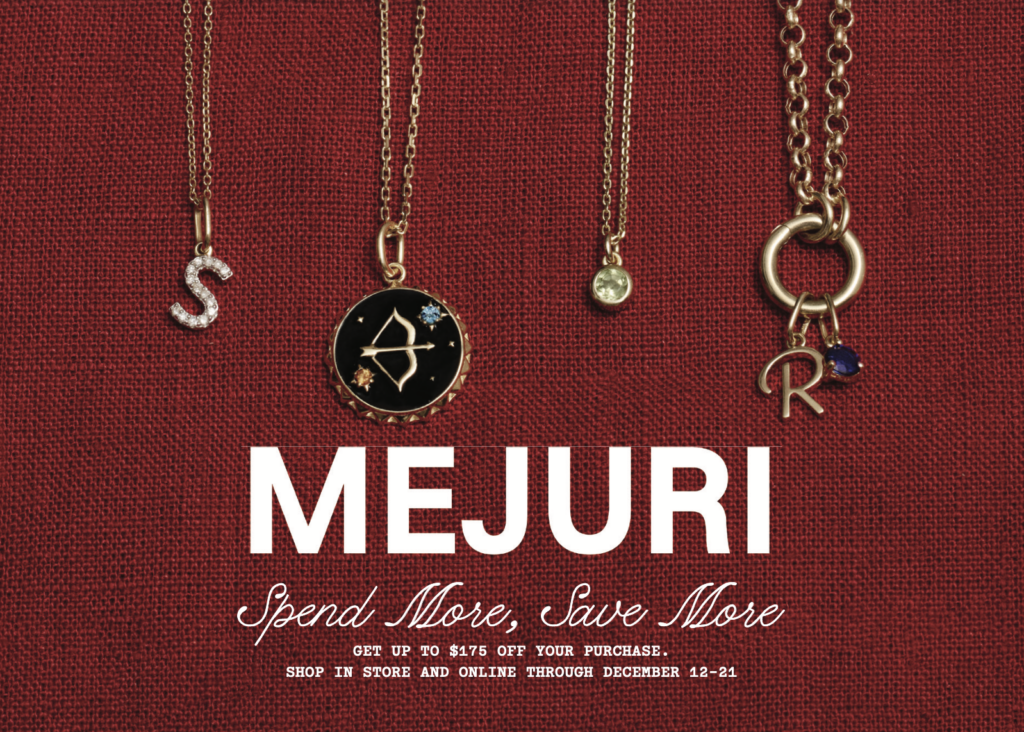
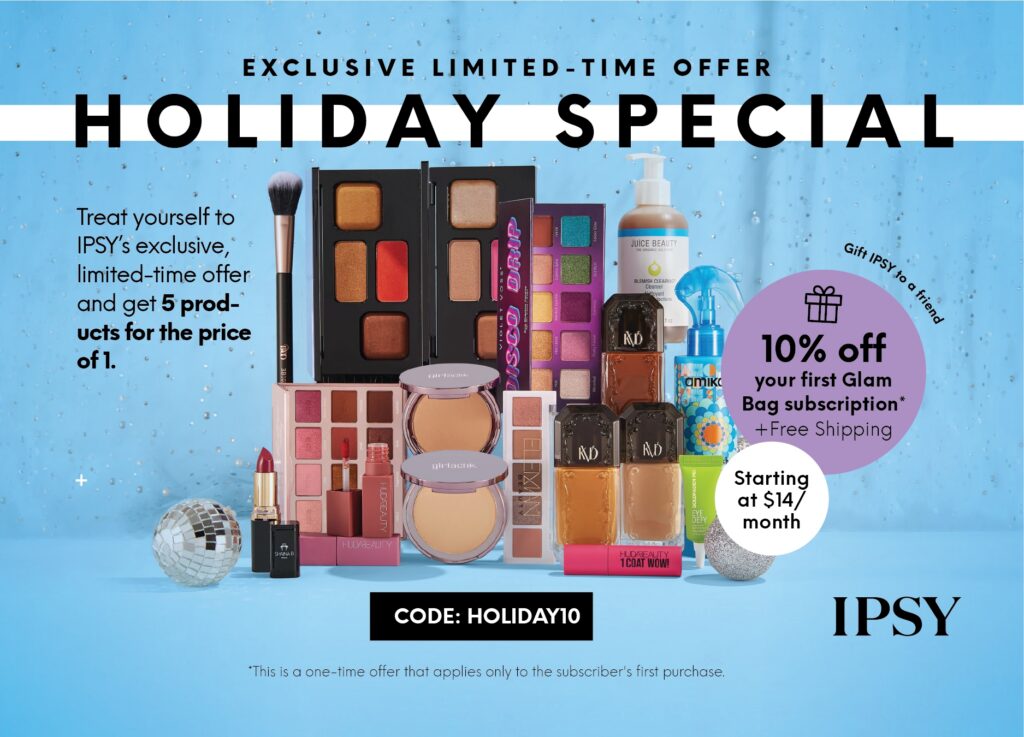
The clearest holiday promotions lead with a single message: one sale, one discount, or one seasonal benefit. When several offers compete for attention, shoppers have to work harder to figure out what the promotion actually means for them.
Holiday promotions remain one of the most common uses of direct mail because price can influence when a shopper makes a purchase, particularly during seasons when spending tends to increase. A sitewide sale, a limited-time discount, or a specific seasonal benefit gives customers a concrete reason to act.
Brands such as Mejuri and Ipsy demonstrate how a focused offer can do the heavy lifting. Simple promotional messaging paired with clean creative helps shoppers understand the value at a glance.
That clarity is especially valuable during the holiday season, when consumers are already sorting through promotions across countless channels. Give them one compelling reason to buy, and make it easy to see.
4. Put Best Sellers Front and Center
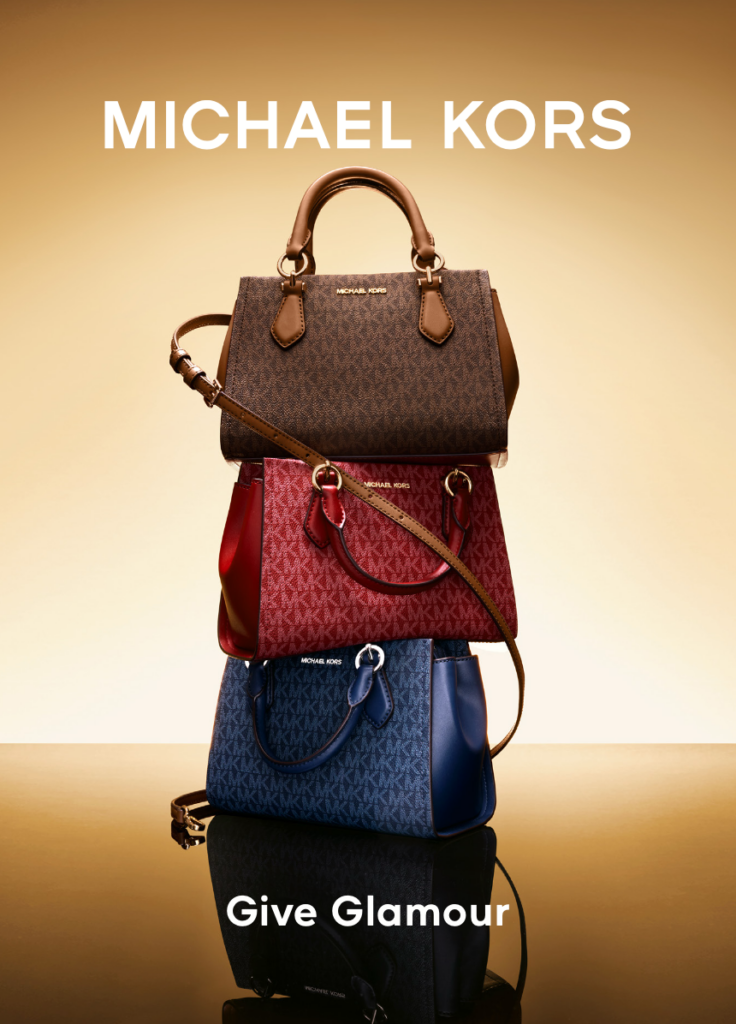
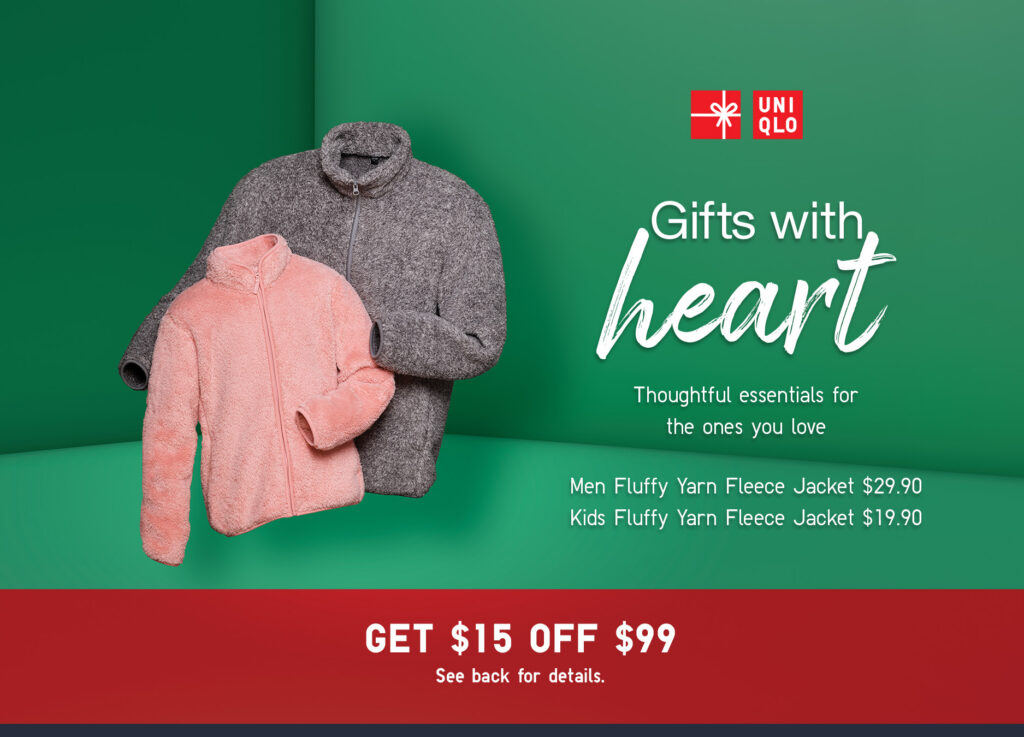
When shoppers are unfamiliar with a brand or product catalog, best sellers provide an easy place to start. Popular products already have a track record of customer demand, making them a more natural choice for both gift buyers and existing customers.
Global brands such as Uniqlo and Michael Kors frequently use best-seller-led creative to put proven products at the center of their marketing. For a shopper discovering a brand for the first time, a best seller can provide a sense of confidence. For an existing customer, it can offer a familiar product worth considering for themselves or someone on their gift list.
That makes best-seller creative particularly versatile during the holidays. The same piece can support different purchase motivations without needing to communicate a large assortment.
The product selection should reinforce the message. Rather than trying to show everything a brand offers, feature products with clear demand or strong customer value and let those products take center stage.
5. Help Shoppers Picture the Product in Their Lives

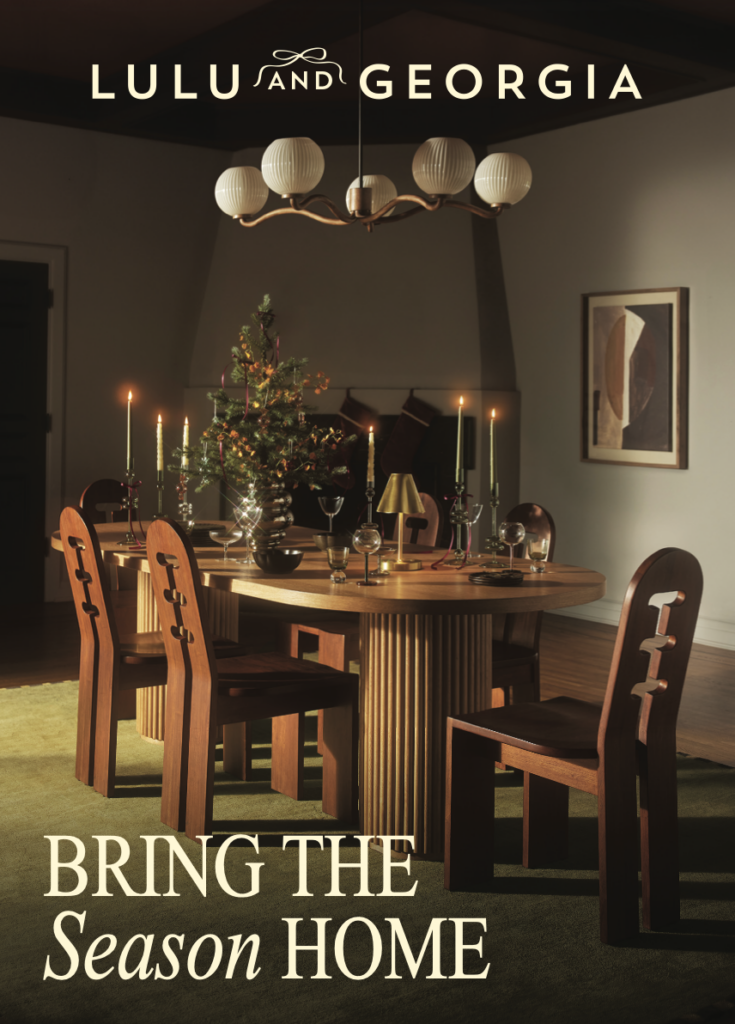
Lifestyle visualization uses imagery to show a product in context, whether that’s in a home, part of a daily routine, or within a holiday setting. The approach creates seasonal relevance through the visual itself, without requiring a promotional message.
Major home and lifestyle brands such as Beyond Yoga and Lulu and Georgia frequently use this type of imagery to make products feel more tangible and relevant.
Not every piece of holiday creative needs a discount attached. A strong visual can generate interest without extensive explanation, and showing a product in context can convey what a lengthy product description cannot.
Lifestyle visualization can be particularly effective for premium-positioned brands. It creates a sense of seasonality through mood and setting while keeping the product and brand identity front and center.
When it Comes to Holiday Creative, Simplicity is Key
Across all five direct mail holiday best practices, the same principle keeps coming up: give shoppers one clear reason to pay attention, then make it easy for them to act.
Restrained holiday color keeps the brand recognizable. Curated gift guides make decisions easier. Single-message promotions make offers immediately understandable. Best-seller-led creative gives shoppers a proven starting point. Lifestyle visualization helps them imagine the product in their own lives.
Together, these approaches can help retailers create holiday direct mail that stands out without adding more clutter to an already crowded shopping season.
Want to reach your highest-value holiday shoppers with purchase data-powered marketing? Contact us to learn how PebblePost drives incremental revenue for leading brands with Programmatic Direct Mail and Performance CTV.