Retail marketers are facing a new reality.
Growth still matters, but executives are asking tougher questions about incremental revenue, profitability, customer lifetime value, and whether marketing investments are genuinely moving the business forward.
These questions sit at the center of our work at PebblePost, where we help brands drive and prove incremental outcomes across CTV and Programmatic Direct Mail.
They also shaped a recent conversation we hosted at CommerceNext with Lauren Price, SVP of Marketing & Communications at COS, and Steph Laures, Chief Digital Officer at Todd Snyder.
Their perspectives reflect a broader shift happening across retail. Marketing accountability is no longer defined by attributed conversions or top-line growth alone. It’s now tied to incrementality, profitability, customer lifetime value, and alignment with broader business goals.
Watch the full conversation below, or keep reading for the biggest takeaways.
Why Retail Marketers Are Prioritizing Profit Over Growth Metrics
For years, growth was the primary measure of marketing success.
Today, rising acquisition costs, inflation, tariffs, and greater executive scrutiny have changed the conversation. Marketing leaders are expected to deliver sustainable growth while demonstrating profitability and long-term customer value.
As Steph Laures explained:
“Ten years ago, we all operated in a grow-grow-grow mindset. Now it’s profitability, bottom-line growth, and sustainable metrics. We’re all trying to figure out how to do more with less.”
At COS, Lauren Price has seen a similar shift:
“The accountability is still really important, but we need to increase expectations around what that looks like.”
Marketing teams are still responsible for performance, but performance itself is being measured differently.
Why Incrementality Is Replacing Last-Click Attribution
Traditional attribution models show where conversions occurred.
They don’t always explain what caused them.
As brands invest further up the funnel, leaders are recognizing that last-click metrics alone fail to capture the full impact of marketing investments.
Different objectives require different measures of success. An awareness campaign shouldn’t be judged on the same timeline or against the same KPIs as a paid search campaign designed to capture existing demand.
Executive teams are asking:
What would have happened if this marketing investment had never been made?
That’s where incrementality comes in.
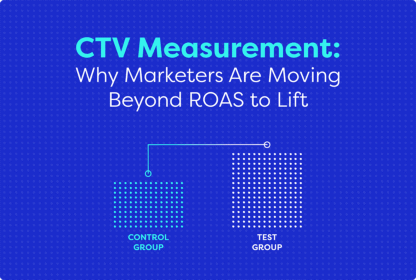
Incrementality measures the business impact that would not have occurred without a marketing investment.
Rather than assigning credit to a touchpoint, it helps marketers understand whether a campaign generated new demand or simply captured customers who were already on the verge of converting.
For many retailers, that distinction has become foundational.
At Todd Snyder, Steph described incrementality testing as a turning point:
“When I came in, we had never done any holdout testing. We didn’t really know what was working and what wasn’t.”
Today, those tests help the team evaluate incremental return on ad spend (iROAS), incremental customer acquisition cost (iCAC), and customer lifetime value (LTV) across channels.
COS combines incrementality with marketing mix modeling and lift studies to understand how marketing investments contribute across the entire customer journey.
The common thread is clear: marketers need independent validation of what is truly driving growth.
That’s the measurement philosophy behind PebblePost. Because CTV and Programmatic Direct Mail are non-click-based channels, incrementality testing is essential for understanding their impact. We use cross-brand transaction data to establish baselines, measure lift, and validate whether campaigns generated net-new revenue or simply touched customers who were already likely to convert.

How Leading Retailers Test Marketing Effectiveness
Testing has evolved from an occasional exercise into an ongoing discipline.
Steph described a rigorous approach that extends beyond one-time experiments:
“We’re not only testing, we’re also retesting every channel, probably every three months, so we understand what it does at peak seasonality, low seasonality, and different promotional moments.”
That includes CTV and Programmatic Direct Mail, where Todd Snyder works with PebblePost to drive and measure iROAS across different customer acquisition and seasonal windows.
Continuous testing helps teams understand how channels perform across seasons, promotional periods, creative approaches, and vendor relationships.
At the same time, marketers still need faster signals to guide day-to-day decisions. Long-term frameworks, such as incremental testing and marketing mix modeling, are often paired with shorter-term media metrics that support real-time optimization.
The combination provides strategic confidence and operational agility.
Why Marketing Leaders Must Align With Finance Teams
Marketing accountability largely depends on cross-functional alignment.
Many organizations still view marketing primarily as a cost center. The strongest leaders are changing that perception by connecting marketing investments to broader business outcomes.
Lauren described one important realization: “We just need to demonstrate profit, and then our goals are really aligned.”
That alignment creates better conversations with finance teams and executive stakeholders, but it also requires marketers to communicate differently.
As Lauren put it:
“Start marketing your marketing.”
Teams need to establish shared expectations around which metrics matter, when results should be expected, and how different investments contribute to profitability over time.
Trust in measurement ultimately creates trust in marketing decisions.
What Retail Marketing Leaders Need to Measure in 2026
The conversation with COS and Todd Snyder highlights several trends that are reshaping marketing accountability across retail.
Leading brands are prioritizing:
- Incremental revenue over attributed revenue
- Profitability alongside top-line growth
- Customer lifetime value as a core acquisition metric
- Alignment with finance and executive teams
- Continuous testing and measurement validation
The era of marketers grading their own homework is ending.
Today’s leaders are being asked a more important question:
What would have happened if the marketing investment had never been made?
The brands that can answer that question with confidence will be best positioned to drive sustainable growth in the years ahead.
Looking to generate incremental outcomes you can confidently defend? Reach out to learn how PebblePost helps leading marketers drive measurable impact across CTV and Programmatic Direct Mail.
Frequently Asked Questions About Retail Marketing Measurement
What is incrementality in retail marketing?
Incrementality measures the revenue or business outcomes that would not have happened without a specific marketing investment. Unlike attribution models, it helps marketers understand true causal impact.
Why are retailers moving beyond last-click attribution?
Last-click attribution identifies where conversions occur but often fails to capture the influence of upper-funnel channels, brand investments, and long-term demand generation efforts. Incrementality testing helps brands determine what actually drove new growth.
What metrics are leading retail brands prioritizing in 2026?
Many retail leaders are focusing on incremental revenue, profitability, customer lifetime value, and incremental return on ad spend as they work to connect marketing investments to broader business outcomes.